Blog
Amir Shavitt
Zafran and Athena: Turning the First Wave of AI-Discovered Vulnerabilities into Protection
September 29, 2026
The Wall Street Journal reports that carriers have moved past checking security controls and are now clocking how fast policyholders can find, mitigate, and patch vulnerabilities. Here is what that means for your VM program, what to demand from your tooling, and why regulated industries have the least room to wait.

On July 1, 2026, The Wall Street Journal published Cyber Insurers Focus on Speed as AI Rewrites Security. The headline undersells the story. For years, carriers priced cyber risk on a checklist: MFA deployed, endpoints protected, backups offline. According to the Journal, that era is ending. The question underwriters now want answered is how fast an organization can detect, patch, isolate, and recover when a new vulnerability lands.
If that framing sounds familiar, it should. It is the same logic behind CISA's BOD 26-04 and JPMorgan's ten-action letter. Three of the most influential forces in security, regulators, tier-one enterprises, and now the insurance market, have converged on a single conclusion within a matter of months: in an AI-accelerated threat environment, vulnerability response speed is the metric that matters. And your VM program is where that speed is either built or lost.
The Journal is clear about the trigger. Advances in AI are shrinking the gap between the discovery of a software flaw and its exploitation in the wild, and carriers are rewriting their risk models around that compression. Coalition's chief revenue officer Shawn Ram put it plainly: "Frontier AI models are accelerating the pace of cyber risk." His point is that AI does less to invent new threat categories and more to crush the timeline from vulnerability discovery to weaponization.
Governments agree. The Journal notes that intelligence agencies across the Five Eyes issued a rare joint warning in June that newer AI models could reshape cyber risk within months rather than years, potentially invalidating long-held assumptions about defense.
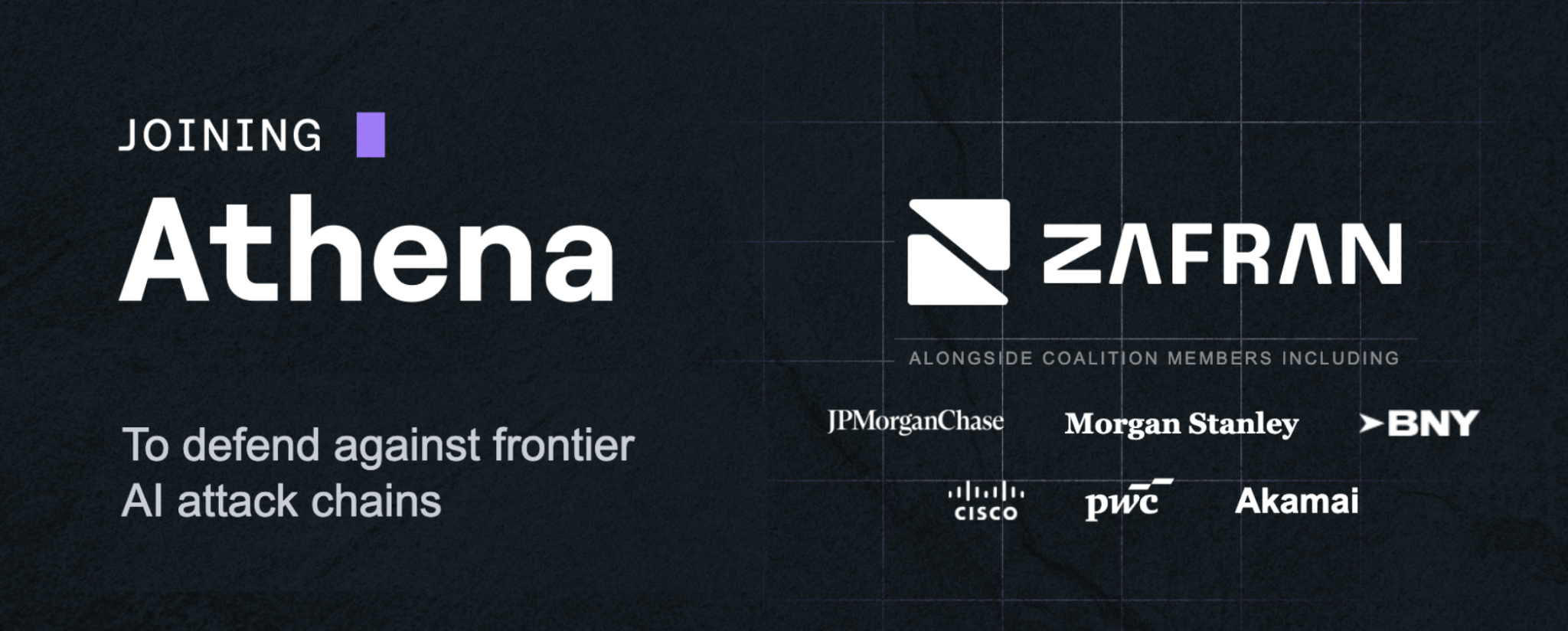
The scale of what AI-driven discovery produces is no longer hypothetical. In its first three weeks, the Athena coalition, the coordinated defense effort Zafran joined this month, processed more than 40,000 newly discovered vulnerabilities, doubling its intake in that window. This is the collapsing window that drove CISA to issue three-day remediation clocks in BOD 26-04. The insurance market is simply the next institution to reprice around it.
Cyber insurance applications used to center on static controls. The Journal reports that carriers are now probing three areas that map directly onto vulnerability management:
Exposure to widely used tools. How vulnerable are you to a compromise of software that thousands of other organizations also run? This is the underwriter's version of aggregation risk, and it means your exposure to shared components is now a pricing input.
Patch decision velocity. How quickly can you determine whether a new disclosure affects you and whether a patch needs to ship? Note the precision here. Carriers are asking about time-to-decision, the interval between a CVE dropping and your team knowing where it lives in your estate.
Vendor oversight. How thoroughly do you monitor the third parties in your stack? Supply chain exposure is now part of your insurability.
As Dustin Carlson of SRA 831(b) Admin told the Journal, carriers have moved past checking whether basic controls exist and are now evaluating how fast an organization can detect, patch, isolate, and recover when new vulnerabilities emerge. Ram's closing observation lands the same way: point-in-time assessments and annual questionnaires lose their meaning in an environment that changes materially within hours.
Regulated industries should read the WSJ piece as confirmation rather than news, because the same demand has already arrived through two other channels.
The first is their own peers. JPMorgan's letter, written by a Glasswing participant and one of the most sophisticated security organizations in banking, told the industry to answer "where are we exposed?" in minutes, to measure mean-time-to-patch as a core operational metric, and to fix critical internet-facing vulnerabilities at record pace. FS-ISAC followed with its own post-Mythos guidance built on the assumption that every vulnerability will be exploited.
The second is the supervisory apparatus. Financial institutions already operate under continuous scrutiny of operational resilience, third-party risk, and incident reporting timelines, and examiners have a long habit of adopting the benchmarks that binding directives like BOD 26-04 establish. When your regulator, your largest peer, and your insurance carrier all converge on the same metric in the same quarter, that metric is no longer aspirational. It is the standard your next exam, your next renewal, and your next board meeting will be scored against.
Financial services also sits at the center of the aggregation scenario itself. Banks, insurers, and payment processors run deep stacks of shared vendor software and face concentration risk by design. That is exactly why banking names sit among Athena's founding members: the institutions with the most to lose from a systemic event are building the pre-disclosure defense layer first.
It is also why the financial industry itself is backing Zafran's approach. Amex Ventures, the venture arm of American Express, made a strategic investment in Zafran this year, citing how visibility and coordination across security controls become essential as financial systems grow more complex and interconnected.
Urgency without direction produces shelfware. If the renewal conversation, the examiner, and the board are all going to score you on response speed, these are the capabilities to require of your program and your tooling. Treat them as evaluation criteria.
Continuous, unified exposure visibility. One source of truth across cloud, on-prem, AppSec, and endpoint findings, updated continuously. If answering "are we exposed to this CVE?" requires launching a scan or reconciling three consoles, the first-mile metric is already lost.
Prioritization by exploitability in your environment. Reachability, runtime presence, live exploit intelligence, and asset criticality must drive the queue. CVSS-ranked backlogs cannot survive 40,000-vulnerability months, and BOD 26-04 has already removed CVSS as the federal standard.
Control-aware risk assessment. This is the requirement most programs miss. Your platform must know which compensating controls you already run, WAF, IPS, EDR, segmentation, cloud policy, and factor them into every finding's real risk. Without it, you cannot distinguish an exposure that demands a three-day fire drill from one your existing defenses already neutralize, and you cannot prove either to an underwriter.
Mitigation as a first-class action, validated. When exploitation moves in hours and patches take weeks, the program needs a tested path to neutralize an exposure through controls already deployed, with evidence the mitigation actually holds. A mitigation that has never been validated is a hope, and underwriters do not price hope favorably.
Intelligence that arrives before disclosure. If the first time your program hears about a vulnerability is when the CVE publishes, you start the race at the same moment the attacker does. Pre-disclosure intelligence, and coverage of the silent no-CVE flaws scanners miss, is moving from advantage to requirement.
Evidence on demand. Remediation velocity, exposure aging, mitigation coverage, and exception volumes, tracked continuously and reportable to a carrier, an examiner, or a board without a manual data-gathering exercise.
The list above describes the Zafran platform's operating model.
Zafran answers "where are we exposed?" in a single query. It unifies findings from your scanners, cloud, AppSec, and endpoint tools into one normalized, continuously updated view of your estate, so the time-to-decision your carrier now asks about drops from days to minutes.
Zafran assesses true exposure with control-aware context. Every finding is correlated with runtime presence, internet reachability, active exploitation intelligence, asset criticality, and, uniquely, the state of the compensating controls already deployed in your environment. That control-aware layer answers the exact question carriers are probing: which vulnerabilities are already neutralized by defenses you own, and which represent real, insurable-loss risk.
Zafran starts before the CVE does. Through Athena, Zafran receives pre-disclosure vulnerability intelligence and develops validated protection while flaws are still under embargo. On the day a critical vulnerability goes public, mitigations are already staged for customers, and the silent no-CVE flaws that conventional scanners never flag come into view. For an institution whose carrier is pricing aggregation risk, a head start measured in weeks changes the renewal math.
Zafran mitigates ahead of the patch cycle, with validation. The platform maps every exposure to the WAF, EDR, and network controls that can shield it now, delivers the tuning steps, and confirms the mitigation blocks the exploit before it reaches production. Protection goes in without breaking the systems it defends, which matters most in environments where uptime is a regulatory obligation.
Zafran makes the speed provable. Remediation velocity, exposure aging, and mitigation coverage are tracked continuously, giving you the evidence base for the renewal conversation, the exam, and the board deck. When the questionnaire asks how fast you can detect, patch, isolate, and recover, you answer with your own data.

The signal from the WSJ piece is that a third institutional force has joined regulators and tier-one enterprises in repricing cyber risk around vulnerability response speed, and for financial services all three now point the same direction at once. The security controls that earned favorable premiums in 2024 are becoming table stakes. What gets underwritten next is your velocity, your visibility into exposure your scanners cannot name, and your ability to prove both.
VM programs built on periodic scans and annual attestations have a limited shelf life, and the renewal cycle will make that visible before an incident does. The teams that adopt the requirements above and move to continuous exposure management now will walk into that conversation with evidence. Everyone else will walk in with a questionnaire.
Traditional vulnerability management must change. So many are drowning in detections, and still lack insights. The time-to-exploit window sits at 5 days. Implementing a Continuous Threat Exposure Management (CTEM) program is the path forward. Moving from vulnerability management to CTEM doesn't have to be complicated. This guide outlines steps you can take to begin, continue, or refine your CTEM journey.