Blog
Zafran Team
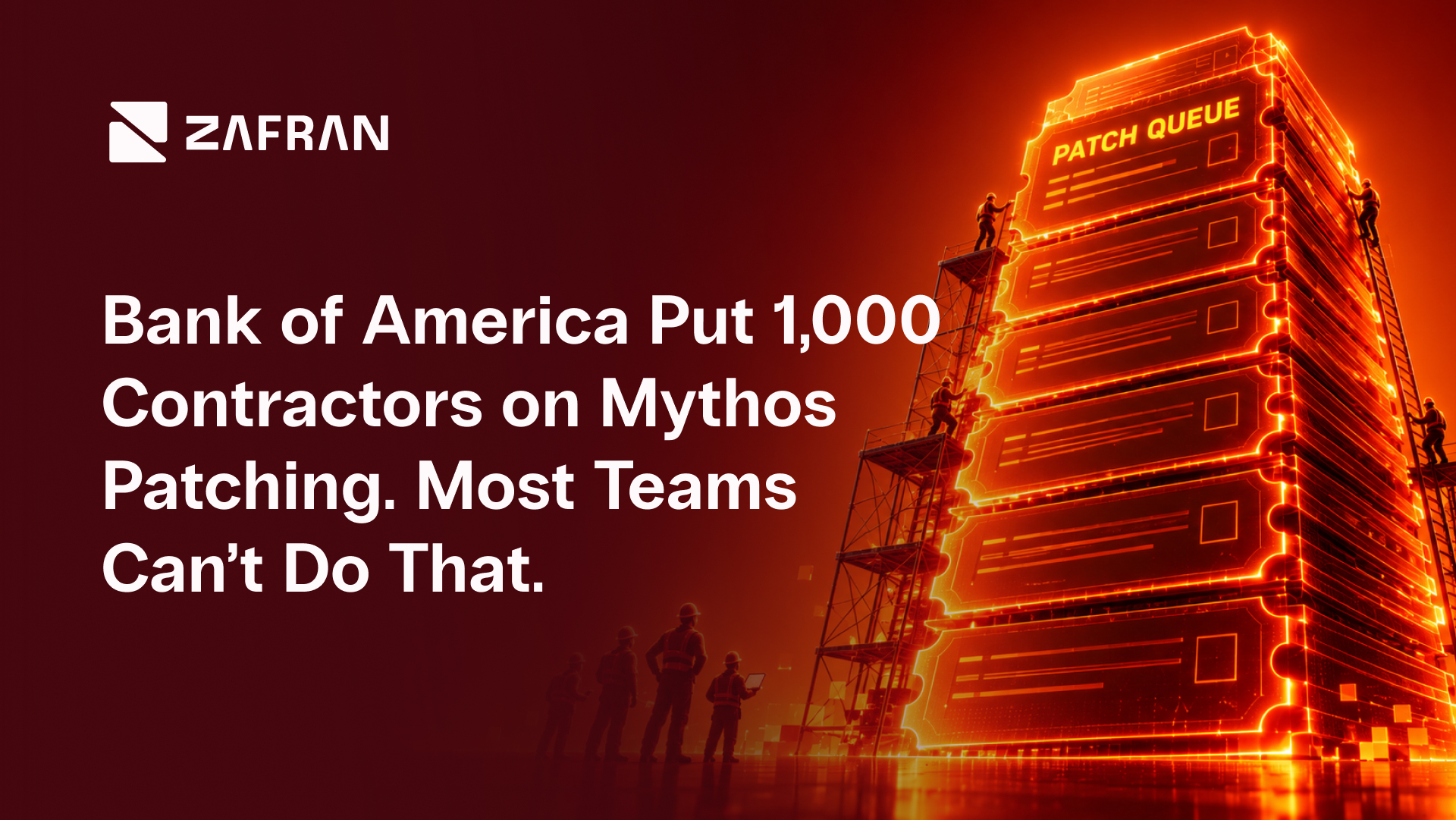
Bank of America Put 1,000 Contractors on Mythos Patching. Most Teams Can’t Do That.
October 16, 2026
Ask a remediation lead where the time on a given finding actually goes, and patching is rarely the answer. The delay sits earlier, in the stretch between a CVE landing in the queue and somebody establishing whose machine it is. A Slack thread. A CMDB lookup that returns a name from two reorgs ago. A ticket that bounces across three teams before it settles.
Effective security remediation depends on asset ownership, a quiet dependency that drags down your most important reporting metrics every hour it stays unresolved. MTTR, SLA compliance, patch coverage: the clock on each one starts the moment a vulnerability appears, and the days spent tracking down the right owner count the same as the days spent patching.
Most organizations already have an ownership answer somewhere. It is scattered across a CMDB, cloud tags, identity logs, naming conventions, host activity logs, past remediation work, code repositories, and the institutional memory of four long-tenured engineers.
Static owner lists are the traditional workaround, and they decay on a predictable schedule. People move teams, services get handed off, assets get rebuilt, and a list that was accurate in January is wrong by April. The maintenance burden falls on the same team that is already behind on remediation.
So ownership gets resolved the manual way: by asking around. The signals were there the whole time; they just needed someone to weigh them against each other.
Humans are great at weighing evidence, but they can't do it manually across thousands of assets every time the network shifts. This kind of continuous, high-volume judgment call, built from partial and conflicting signals, is the perfect job for an agent. So, we built one to do it.
The Zafran Asset Ownership Agent reads across integration signals and the ownership patterns of similar assets in the organization, then infers the likely owner and cites the evidence behind the decision. If the asset carries a tag matching a team that already owns dozens of comparable hosts, and the last logged-in user sits in that team, the agent says so and shows its reasoning.
The evidence is the important part. An inferred owner that comes with its supporting signals is something an analyst can confirm or override in seconds, and something you can show the receiving team when they push back. Ownership decisions become auditable rather than declared.
The Slack thread asking “who owns this asset?” never gets started. Instead, the vulnerability arrives with an owner already assigned. That has a practical consequence for sequencing: a team can start routing work to real owners immediately.
A lookup assumes the answer already sits in one trusted field. In most environments it sits in fragments, and weighing those fragments against each other is the work.
To use the Asset Ownership Agent in Zafran, open an asset in the platform and investigate its owner, or select a group of assets and run the same investigation across all of them. Ask the Zafran chatbot in plain language about one asset or an entire fleet. Or hand the job to autonomous workflows on a set schedule, so unowned assets get assigned on a recurring basis with nobody triggering the run. Every path works on a single asset or in bulk, and the same investigation sits behind all of them, so the choice comes down to which one fits your team's habits.
Ownership resolution has always been treated as overhead, the administrative tax you pay before the real work of remediation starts. It absorbs a meaningful share of every remediation cycle, and it does it invisibly, since no dashboard tracks hours lost to figuring out who to ask.
The Zafran Asset Ownership Agent traces ownership from the signals already in your environment and cites its evidence on every finding. The days between a finding and an owner stop counting against you. What remains in the queue is the work itself, and it sits with the person who can get it done.
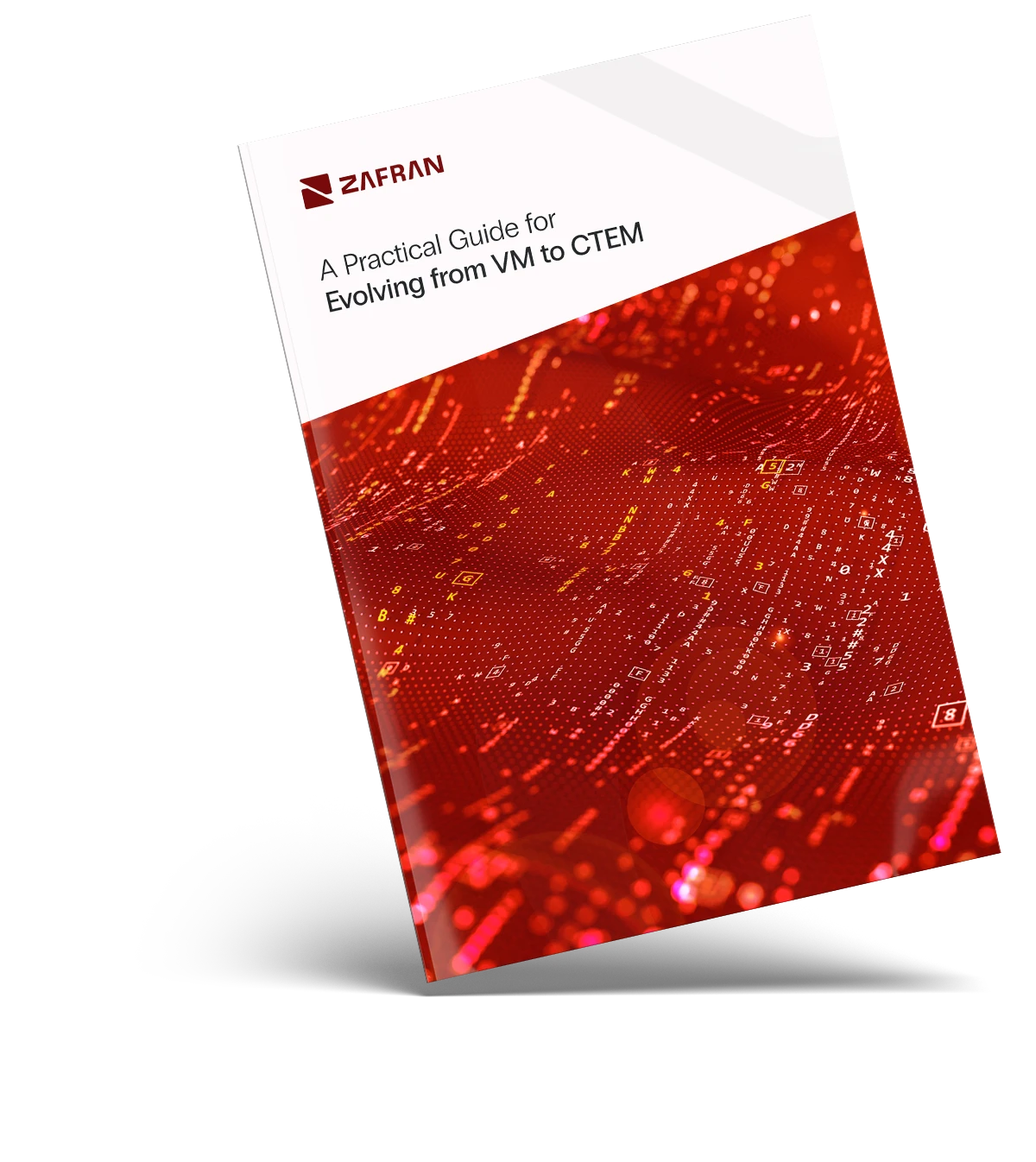
Traditional vulnerability management must change. So many are drowning in detections, and still lack insights. The time-to-exploit window sits at 5 days. Implementing a Continuous Threat Exposure Management (CTEM) program is the path forward. Moving from vulnerability management to CTEM doesn't have to be complicated. This guide outlines steps you can take to begin, continue, or refine your CTEM journey.