

Case Studies

Clarity Over Chaos: How a Fortune 500 Financial Institution Stopped “Panic Patching"

The customer is a leading private lender in the US, specializing in financing and personal loans with a strong focus on risk management and regulatory compliance.

Primary Use Cases

Proactive Exposure Hunting
Risk Mitigation Using Existing Defenses
RemOps & Workflow Optimization

Industry

Financial Services

When every vulnerability comes back marked critical, the word stops meaning anything. That was the reality for this customer's security team: scanner scores that couldn't account for compensating controls, internet exposure, or whether vulnerable code was even running in their environment. The gap between reported severity and actual risk was driving panic patching, straining relationships with remediation teams, and leaving the hardest question unanswered: which vulnerabilities actually matters?

The Challenge: Patch Urgency Driven by Scanner Scores Instead of Real Attack Paths

Before Zafran, prioritization relied on scanner-generated CVSS and EPSS scores. But these scores had no way of knowing whether a vulnerable system sat behind layers of compensating controls, whether the asset was even reachable from the internet, or whether the relevant code was running at all. The result was panic patching: well-defended systems flagged as critical, patch exceptions piling up without clear justification, and growing friction between security and remediation teams. Without a way to measure actual exposure in context, there was no defensible basis for saying "this one actually matters."

The Implementation

The Solution: Prioritizing Vulnerabilities Based on Control Coverage and Exposure

The customer implemented Zafran to assess the true applicable risk of vulnerabilities across their environment. By integrating with existing vulnerability scanners, security controls, and service management systems, Zafran delivered a unified, contextual view of risk across on-prem and cloud environments.

Using live telemetry from tools like EDR, WAF, and NGFW, Zafran identified when assets were already protected by controls that actively blocked exploits. That meant the team could deprioritize low-risk vulnerabilities with confidence, cut down on panic patching, and validate patch exceptions against real data.
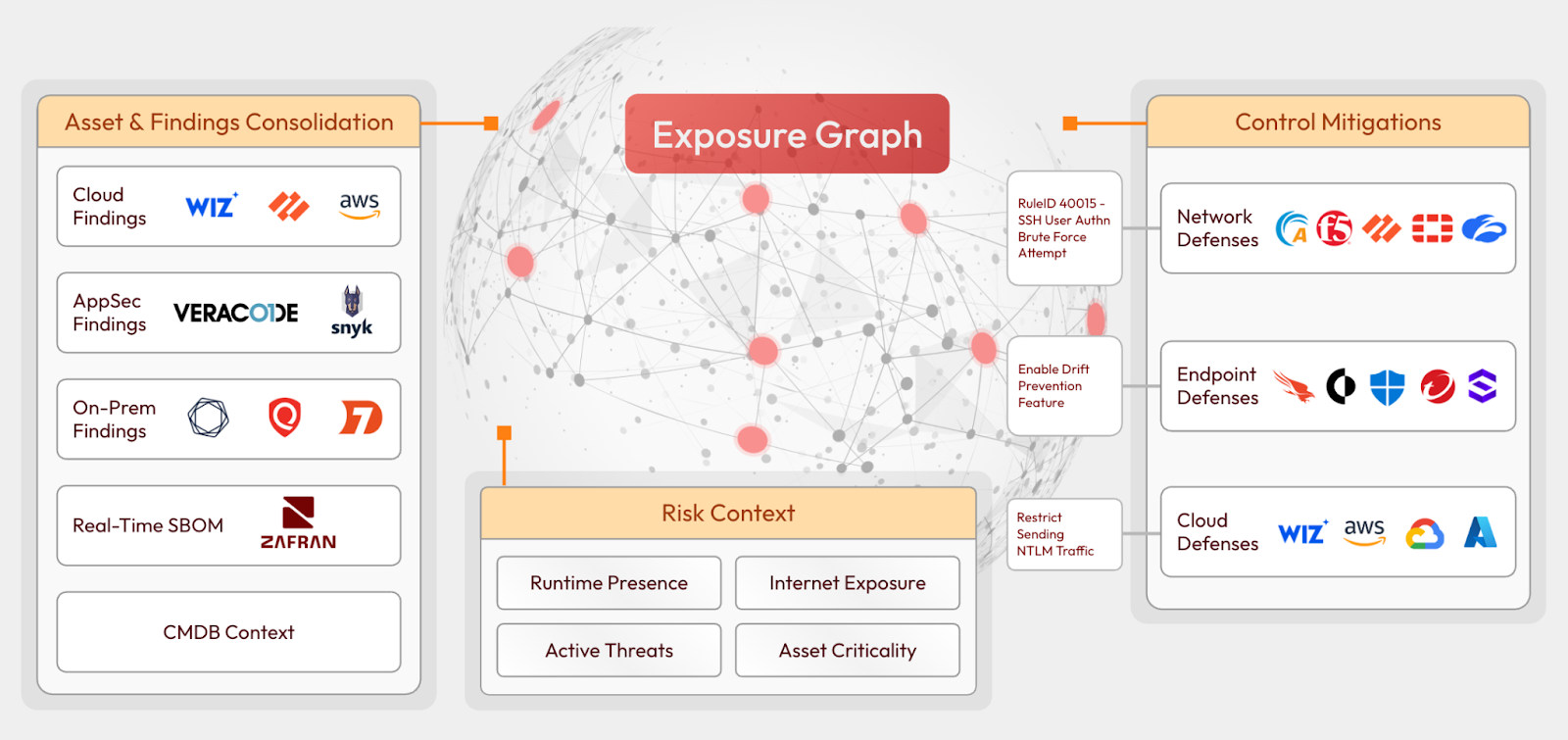
The integration plugged directly into existing change control processes, making remediation workflows faster, coordinated, and auditable. With a clear, evidence-based picture of actual exposure, the friction between security and remediation teams eased. Focus sharpened on credible threats like zero-days and CISA KEVs, and the team had the foundation for a scalable, risk-based vulnerability management framework.

[With Zafran,] we are able to see the real risk of a vulnerability in our environment. We don't have to 'panic patch' for every high CVSS/EPSS vulnerability.

VP of Information Security, 1K+ employees

The Results

Using Zafran's contextual risk analysis, the customer transformed how vulnerabilities were prioritized and managed:

  • Reclassified over 50,000 "Critical" CVSS findings as medium or low based on verified control coverage, removing unnecessary urgency from the queue
  • Identified 23,000 vulnerabilities that could be mitigated immediately by reconfiguring existing compensating controls
  • Cut false-critical noise by 96%, giving teams the focus to act on vulnerabilities that actually carried risk
  • Used real-time signals from EDR, WAF, and NGFW to confirm when defenses were already blocking exploit attempts, avoiding unnecessary emergency patching

Together, these outcomes gave the customer the precision and confidence to scale vulnerability management, with Zafran as the foundation for risk-based remediation.

Discover how Zafran Security can streamline your vulnerability management processes.
Request a demo today and secure your organization’s digital infrastructure.
Request Demo

The customer is a leading private lender in the US, specializing in financing and personal loans with a strong focus on risk management and regulatory compliance.

Industry

Financial Services

Primary Use Cases

Proactive Exposure Hunting
Risk Mitigation Using Existing Defenses
RemOps & Workflow Optimization

Key Outcome

96%

reduction in CVSS Criticals

See Zafran in action

Get a Demo

Learn More

Zafran partners with complex global organizations to help them move from reactive vulnerability patching to proactive risk reduction. With Zafran, security teams can focus on exposures that actually matter—based on live context from their own environment—and take immediate steps to mitigate risk.

We invite you to see what our customers already know. Come see the power of Zafran.

Healthcare
Zafran Team

How a Major Healthcare System Reduced Critical Vulnerabilities by 99% with Compensating Controls

Zafran Team
April 10, 2026
Read More
This is the default text value
Financial Services
Zafran Team

Financial Services Organization Outgrows Kenna and Adopts Evidence-Based Exposure Management

Zafran Team
January 8, 2026
Read More
This is the default text value
Financial Services
Zafran Team

Outgrowing Kenna: Financial Services Company Replaces Kenna with Zafran

Zafran Team
April 3, 2026
Read More
This is the default text value

See Zafran in Action

Prioritize and fix what is truly exploitable using risk context from your existing security tools

Get a Demo